Modern Living Room Design Inspiration for Everyday Living
The contemporary living rooms we’ve designed over 26 years of practice share one conviction: an interior should adapt, not stay still. A room has to make space for changing lifestyles and family dynamics, and for the art, accessories, and travel mementos that accumulate over a life. That belief is what unifies the work — even as every project answers to a different household, vision and site
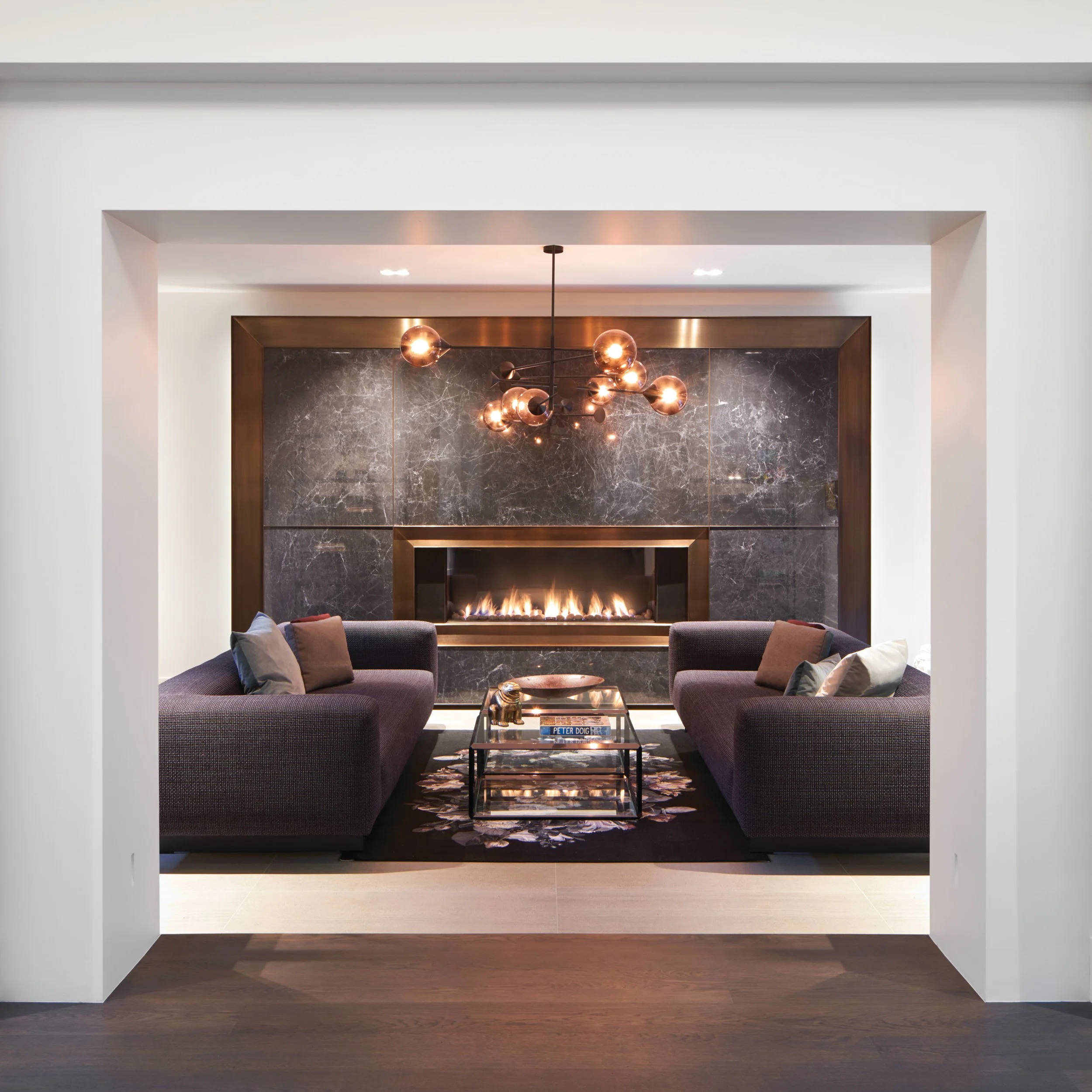
The function of a living room has changed over the years with the way that people live and entertain. Formal living rooms are less common, and are also often part of the family room connected to the kitchen, which means that a less formal design may be appropriate, but if approached thoughtfully it should be able to function both formally and informally. A key component of our designs is the creation of a dramatic focal point in the room. This can be a fireplace, a feature wall, a piece of art, or in some cases it is a compelling view out to the natural environment.
The practice of providing built-in seating areas was big in the 1950’s and 60’s, and we are seeing a resurgence in this approach because it promotes a sense of order and communal gathering. We find it especially useful for smaller living areas where the client is not committing themselves to the lack of flexibility they might desire for larger spaces. For our Tract House 2.0 project we were inspired by the client’s Moroccan heritage to create an intimate U-shaped seating area, with large custom-made cushions that appear to float above the floor, which has become a go-to place for family and friends.

The treatment of the ceiling is often neglected in the design of living spaces. The addition of a dropped or elevated plane with concealed perimeter lighting can enhance the experience of luxury and intimacy. A wood ceiling adds an extra warmth to the space and a feature light fixture, ceiling mounted or suspended, can also create a dramatic focus.
A challenge in many of our projects is how to accommodate a large screen TV into the living space. Often the client wants it over a fireplace. This creates, in effect, a double focal point, and the dilemma of addressing the ergonomics of viewing the screen that recommend keeping it lower down to avoid craning your neck. This is the reason that many of our projects incorporate a horizontal fireplace that allows the TV to be located lower on the wall. Another solution is to create a composition where the TV Is situated next to the fireplace, rather than above it.
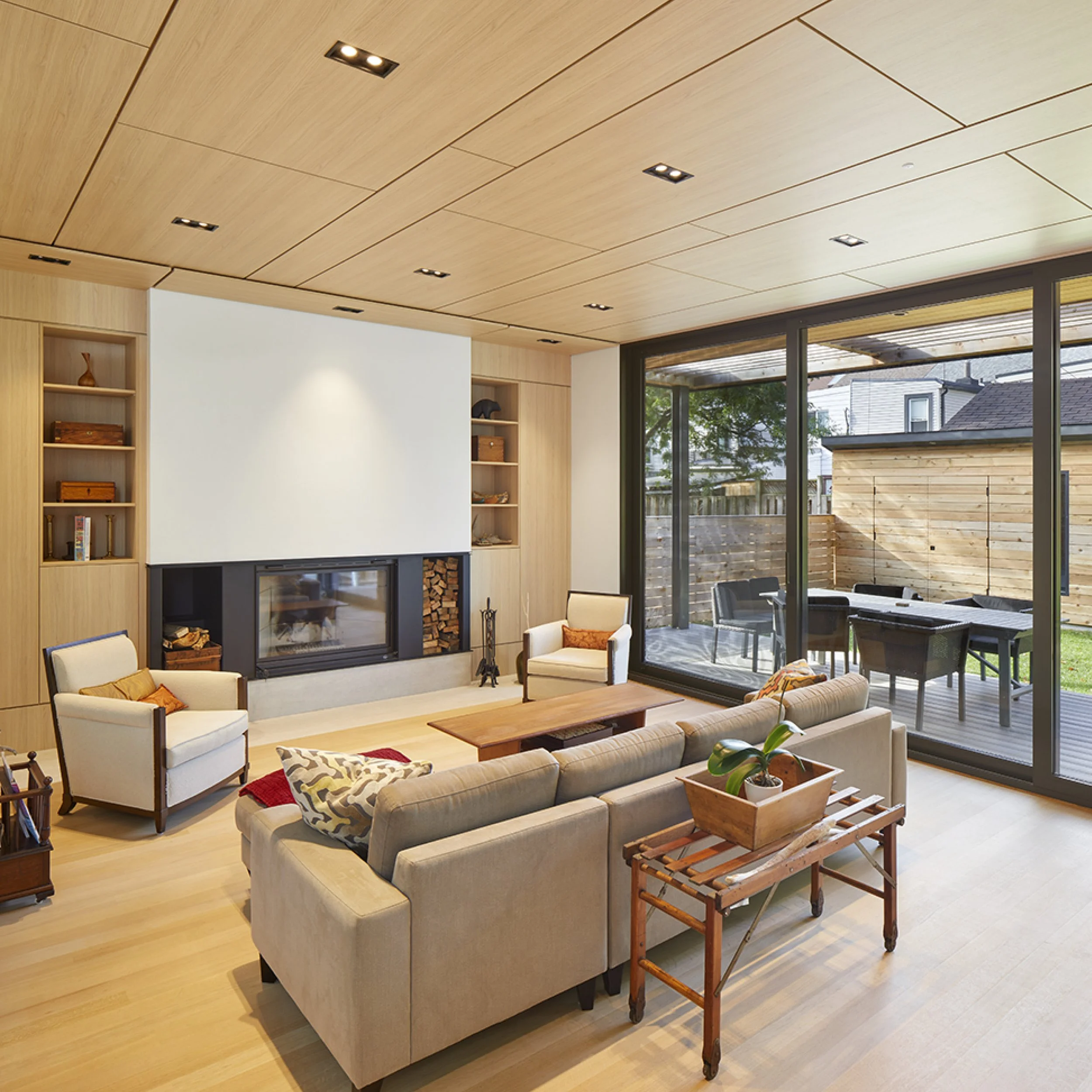
A seamless indoor/outdoor connection runs through all of our projects, but achieving it doesn't necessarily require walls of sliding glass. In Ontario, our climate and summer insects make us think hard about how much to open up, and insect screens carry their own compromises. We've designed beautiful rooms with wide sliding doors, but others rely mostly on fixed windows, which actually allow larger areas of uninterrupted glazing, paired with a single glass swing door for access. On cottage projects especially, where the bugs can make summer evenings unbearable, we'll open a living-space wall onto a covered porch with retractable screens.
Another way of creating a visual connection between inside and outside is to incorporate exterior materials such as stone or wood into the interior finishes. At our House on the Bluffs project, the interior fibre cement walls of the second floor bedroom “slide” out through a wall of glass to become outside walls.
A key component of living room design is to consider the furniture layout as an important part of the design process. While most clients do not know the exact furniture they will purchase during the early design phase, our approach is to test out different configuration options into our 3-D model to explore with the client what layout works best for how they want to live and entertain. In addition, once the actual items are being selected, closer to the move-in date, we can incorporate them into the 3-D models to test them out. This can include seating, rugs, table and floor lamps and artwork.
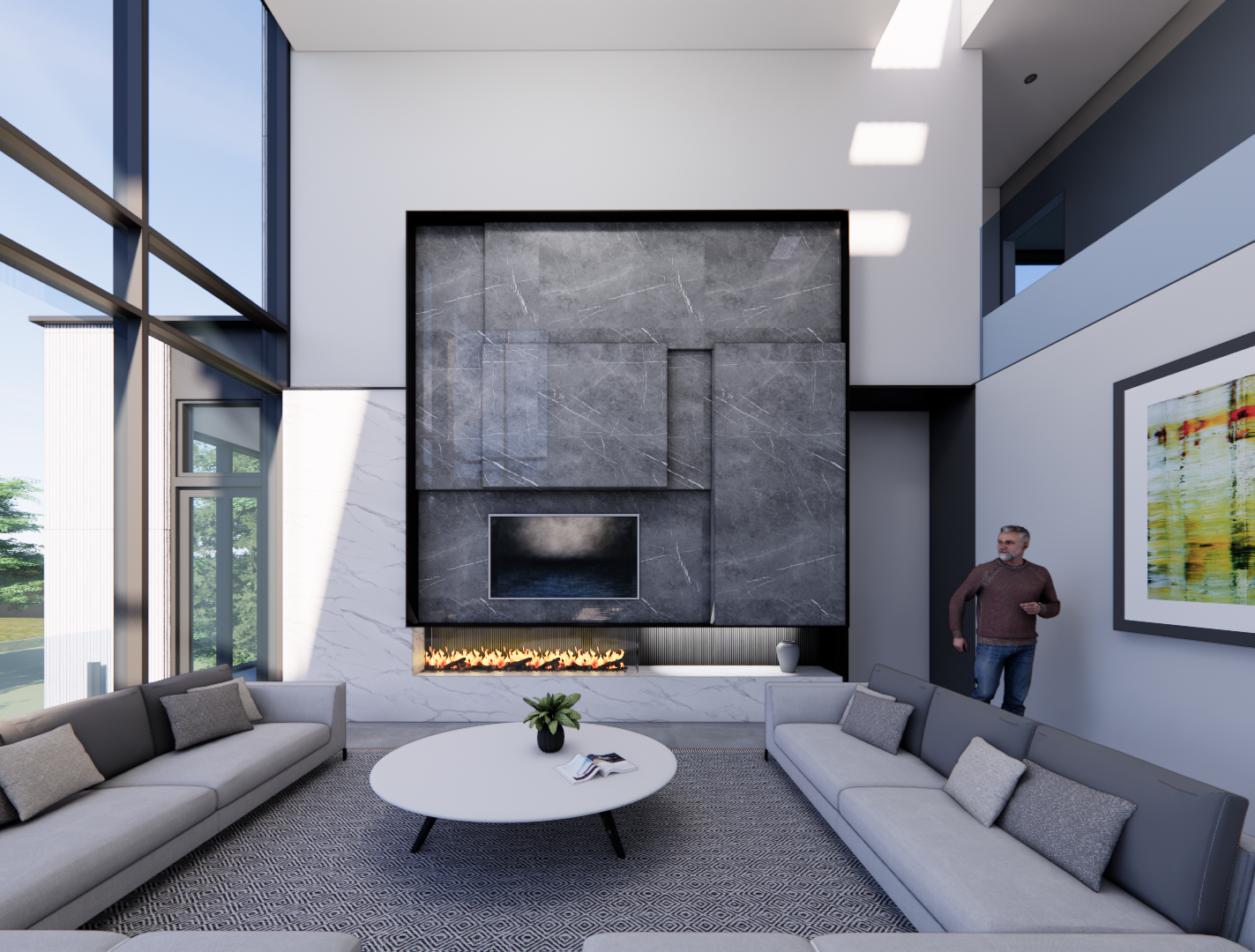
For all the possible variables — a fireplace or a feature wall, built-in seating or a wall of glass — what ties these rooms together is the care behind each decision: where the light falls, how the seating is configured, what the eye lands on both inside and outside. Together they make a room that feels warm and welcoming — the place family and friends are naturally drawn to, and reluctant to leave.
Contact us for a consultation.
About Michael Taylor Architecture + Design:
Michael Taylor Architecture + Design builds on the legacy of Taylor Smyth Architects and continues its commitment to client service, attention to detail and design excellence.
Since 2000, Michael and his team have developed an international reputation for creating elegant architecture and interiors in Canada and abroad. Each project is cultivated from the spirit of its location and the distinctive tastes and unique vision of our clients.