How to Choose a Residential Architect in Toronto
Choosing an architect for a custom home is one of the most consequential decisions a homeowner will make. It shapes the entire experience of design and construction, and ultimately the quality of the home they will live in for decades.
At Michael Taylor Architecture + Design, we've guided clients through this process for over 25 years. Here's what we believe matters most when evaluating your options.

Start with a licensed architect
In Ontario, the word "architect" has a specific legal meaning. Only professionals licensed by the Ontario Association of Architects (OAA) may call themselves architects and take responsibility for the design of a building. "Designer," "building designer," and "design-build" describe something different, and while talented people work under all of those titles, the protections, accountability, and depth of training are not the same.
A licensed architect is trained to think about your home as a whole system: how it sits on its site, how it performs over time, how it meets the zoning bylaws and the building code, and how it holds up to the realities of construction.
Look for relevant and local experience
Custom residential design is its own discipline. An architect who excels at commercial or institutional work may not be the right fit for a home, and vice versa. Look for a portfolio of completed houses, not just renderings, and pay attention to whether the firm has delivered projects at a scale and level of finish similar to what you have in mind.
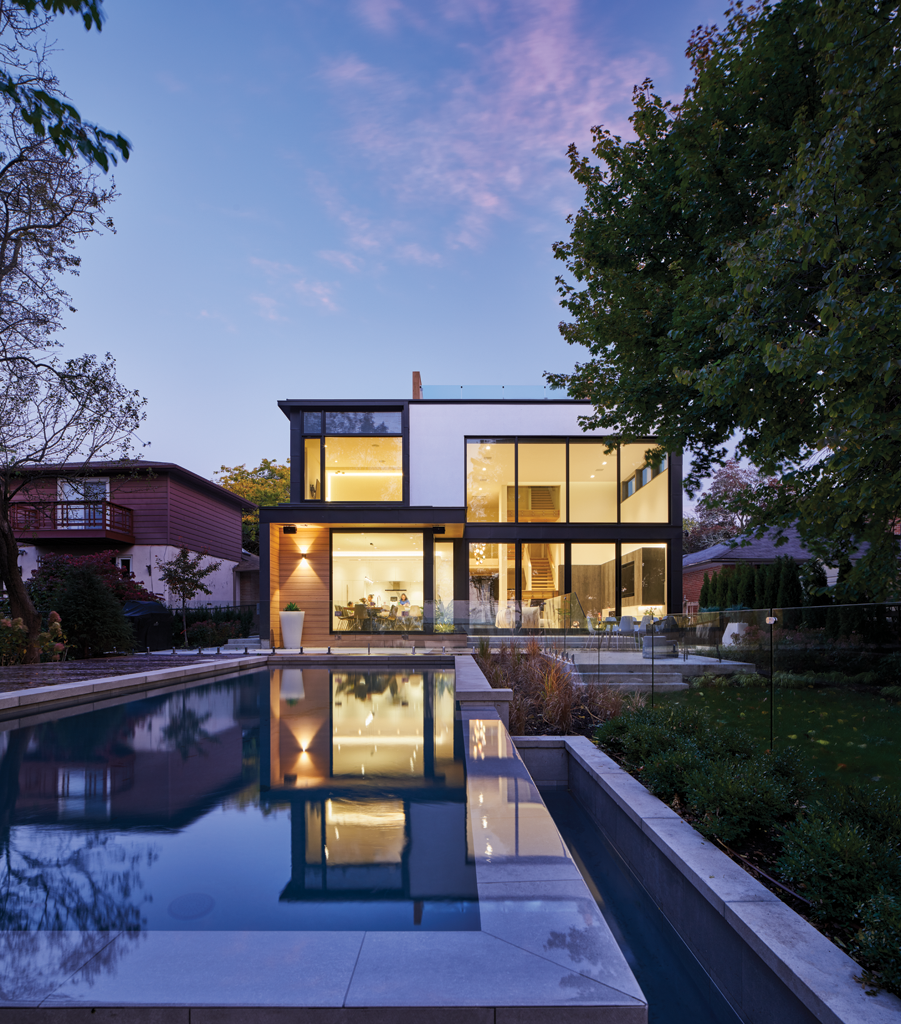
Local experience matters. Ravine lots, the Bluffs, heritage districts, tight urban infill, and demanding zoning all come with their own constraints. So do the approval bodies you may need to navigate - Committee of Adjustment, the local conservation authority, and heritage review among them. An architect who has worked through these processes before will anticipate problems rather than discover them and that foresight protects both your timeline and your budget.
Review the portfolio for responsiveness, not just style
It's natural to be drawn to a firm whose work you find beautiful. But look past the surface and ask a harder question: does every project look the same, or does each one clearly respond to its site and its owners?
A signature style can be a strength, but it can also mean a house is designed to suit the architect rather than the people who will live in it. The best residential work feels inevitable for its particular place and its particular clients. When you review a portfolio, look for range, for evidence that the architect listened, and for homes that solve real problems gracefully rather than simply photographing well.

Be clear on scope and fees
Architects structure their services and fees in different ways, and the distinctions matter. Some offer full service from concept through construction; others provide a more limited scope and step back once permits are issued. Understand exactly what you're paying for, what happens during construction, and where the architect's responsibility begins and ends. Have this conversation early and in writing. A firm that is transparent about scope, fees, and process at the outset is far more likely to be transparent throughout the project.
Look at references, awards, and published work
Tangible signals of quality are worth seeking out. Industry awards, work that has been published, and a record of recognition all point to peer respect and consistent execution. They aren't the whole picture, but they're meaningful.
The strongest signal of all is a client who would hire the firm again — which leads directly to the most important step.
What to ask any firm you're considering
Before committing, ask to speak with past clients. Ask if they were good listeners and how involved the principal architect during design and construction. Ask how they handled the unexpected — because every project encounters it. The answers will tell you more than any portfolio.
Consider how you’ll work together
Designing a custom home is a long and personal process. You'll be in close conversation with your architect for months, often years, sharing how you live and what you value. The working relationship - communication, trust, and the sense that you're being heard - matters as much as any drawing.
Ask yourself whether you feel comfortable disagreeing with this person, and whether they explain their thinking in a way that makes you a better-informed client. A good architect guides you through the difficult moments of approvals and construction without making you feel managed. In our experience, the projects that succeed are almost always the ones built on a genuine, collaborative relationship.
Making the choice
The right architect does more than produce a beautiful set of drawings. They translate your life into a home, navigate the complexities of building in Toronto on your behalf, and stay with you through the inevitable challenges of construction. Take the time to find someone whose experience, judgment, and way of working you trust. It's a decision you'll live with, quite literally, for decades.
If you're beginning to think about a custom home and want to talk through your options, we'd welcome the conversation.
If you're beginning to think about a custom home and want to talk through your options, we'd welcome the conversation.
Contact us for a consultation.
About Michael Taylor Architecture + Design:
Michael Taylor Architecture + Design builds on the legacy of Taylor Smyth Architects and continues its commitment to client service, attention to detail and design excellence.
Since 2000, Michael and his team have developed an international reputation for creating elegant architecture and interiors in Canada and abroad. Each project is cultivated from the spirit of its location and the distinctive tastes and unique vision of our clients.