The Committee of Adjustment Process in Toronto: A Guide for Homeowners
Most homeowners who build in Toronto's established neighbourhoods encounter the Committee of Adjustment (COA) at some point in the process. It's one of the aspects of custom residential work that clients are least familiar with going in, and one where having the right approach and representation makes a genuine difference to the outcome. All of the new residences we’ve designed have gone through this process and we have a great track record of approvals.
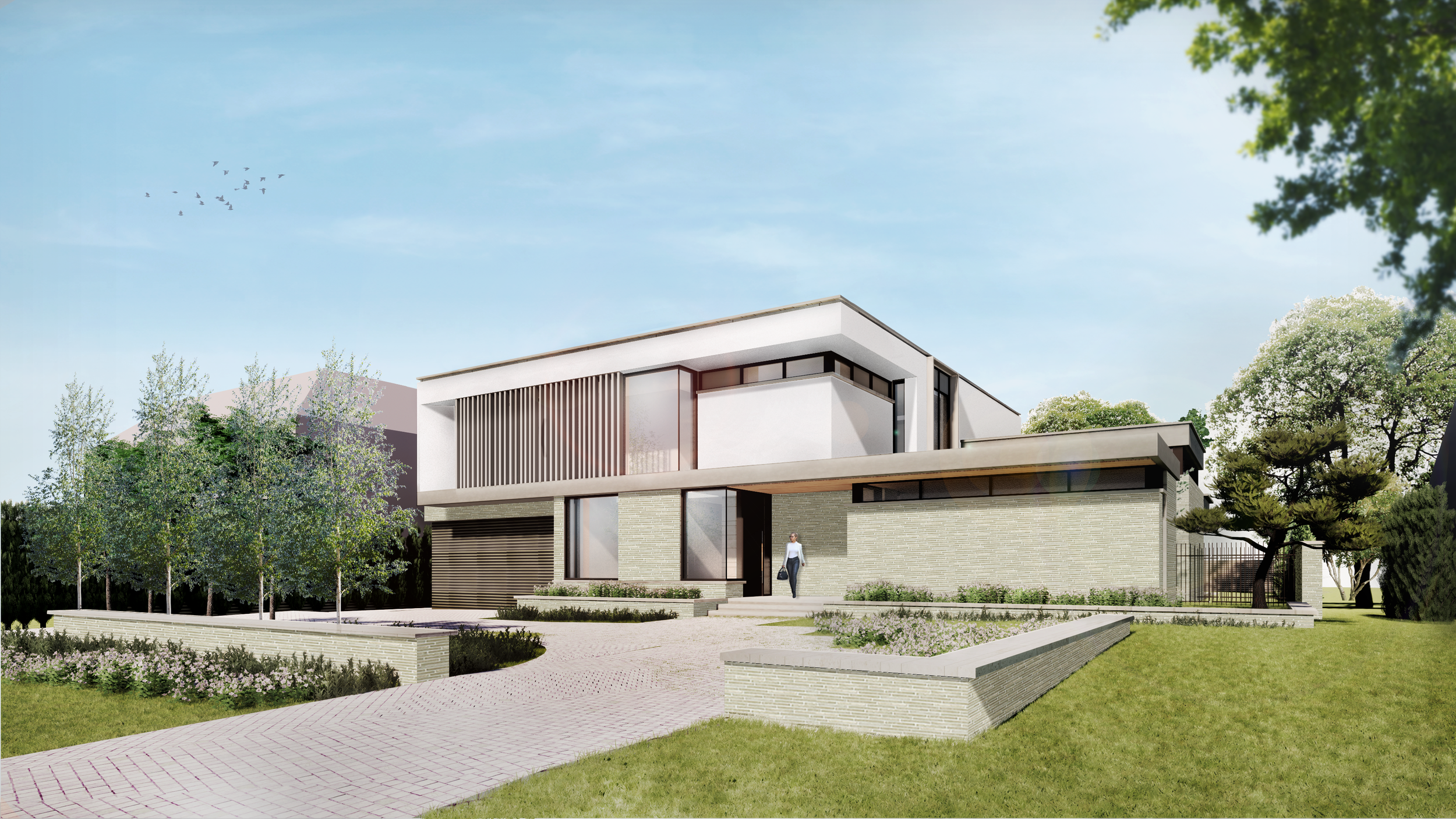
The Courtyard Residence achieved variances for lot coverage, maximum driveway width and platform width.
What the Committee of Adjustment does
The Committee of Adjustment is a quasi-judicial body that grants minor variances from the City's zoning bylaws. When a proposed building or addition doesn't comply with the bylaw in some respect — the setback from a property line is closer than permitted, the building height is over the limit, the lot coverage exceeds the permitted percentage — the Committee has the authority to grant an exception if the variance is considered minor, desirable, and in keeping with the intent of the bylaw.
In Toronto's older and denser neighbourhoods, the gap between what the zoning permits and what a well-designed contemporary home actually requires can be significant and the interpretation of what is a minor variance is subject to interpretation. Building lots that were developed under previous zoning bylaws, neighbourhoods where the actual built fabric doesn't match the current zoning, and houses being built or existing houses being enlarged to meet modern living standards frequently trigger variance applications.
The process
An application to the Committee requires a set of drawings prepared by an architect or designer, a written description of the proposed variances and the reasons they should be granted, and a notice to adjacent neighbours. The application is reviewed by City planning staff, who provide a recommendation to the Committee. A public hearing is scheduled, typically six to eight weeks after the application is submitted, at which the architect generally presents the case. Neighbours may speak for or against, and the Committee votes.
The quality of the submission matters. A well-prepared application — one that demonstrates clearly why the variances are minor, why they are consistent with the character of the neighbourhood, and that proactively address potential neighbour and Committee concerns — tends to move more smoothly. We prepare our submissions with this in mind, liaise with the planner in charge and attend and present at the hearing on our clients' behalf.
What can go wrong
Most unsuccessful applications fail for one of two reasons: the variances are too numerous or too excessive to be genuinely "minor," or adjacent neighbours oppose the application on grounds that the Committee finds persuasive. The second scenario is more avoidable than people assume — in many cases, early and direct conversation with neighbours before the application is filed can either resolve concerns or at least ensure that any opposition is informed rather than reactive.
What we do to facilitate the process
At Michael Taylor Architecture + Design, we advise our clients during the initial development of the design, prior to submitting for COA, about what we believe to be reasonable variances, base on research about what variances have previously been granted within the neighbourhood. We also prepare presentations that the client can use to discuss their project with the neighbours, with the goal of obtaining letters of support or an agreement not to oppose the application.
For example, for the Robert Street II Residence, we were successful in achieving variances for encroachment of the front porch into the front yard setback, exceeding the maximum height and depth and side yard setback.
How long it takes
From application filing to hearing is typically six to ten weeks in Toronto, depending on the Committee's scheduling. If the application is deferred — which happens when the Committee requests revisions or additional information — another cycle is required. Building in adequate time for this process, and not compressing the design schedule to compensate, is something we discuss with clients at the outset of every project where variances are likely.
Contact us for a consultation.
About Michael Taylor Architecture + Design:
Michael Taylor Architecture + Design builds on the legacy of Taylor Smyth Architects and continues its commitment to client service, attention to detail and design excellence.
Since 2000, Michael and his team have developed an international reputation for creating elegant architecture and interiors in Canada and abroad. Each project is cultivated from the spirit of its location and the distinctive tastes and unique vision of our clients.