Designing a Cottage in Ontario: A Different Kind of Home
At Michael Taylor Architecture + Design, we’ve designed cottages and rural properties across Ontario — from Muskoka to the Bruce Peninsula and the shores of Lake Simcoe. No two of those sites are alike, but they ask something a city lot never does: that the land lead, that the materials endure months of weather and absence, and that the home suit the life people come to the cottage to live rather than the one they leave behind in the city.
The site comes first
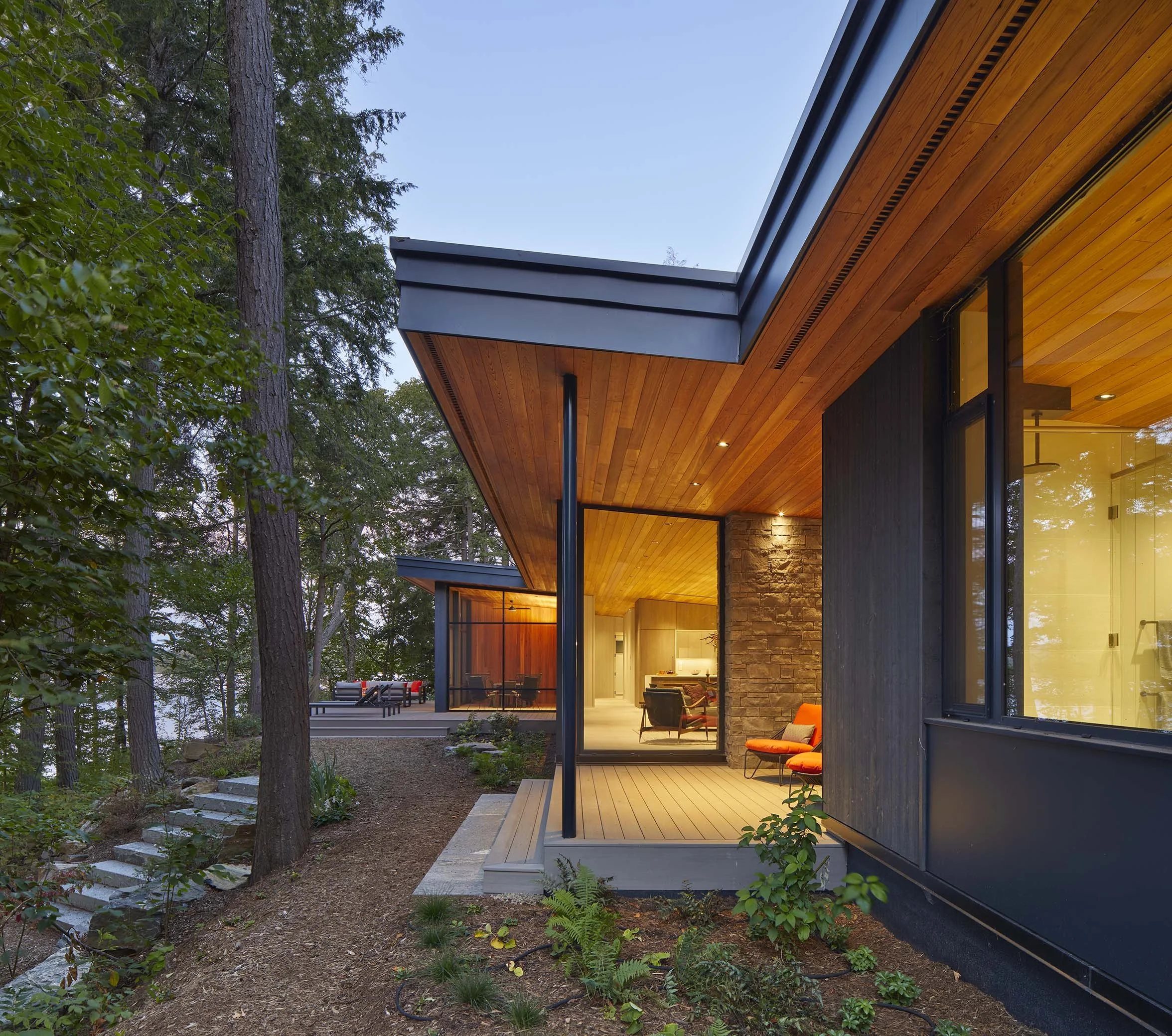
In an urban setting, a lot's orientation, dimensions, and neighbourhood context can have a strong influence on the initial approach to the design. For a rural or waterfront property, the site itself is the primary design driver - the relationship of the land to the water, the slope and topography, views and the existing tree cover, the direction of the prevailing winds and the angle of the summer sun — all of these shape the project in fundamental ways that are not influenced by urban restrictions.
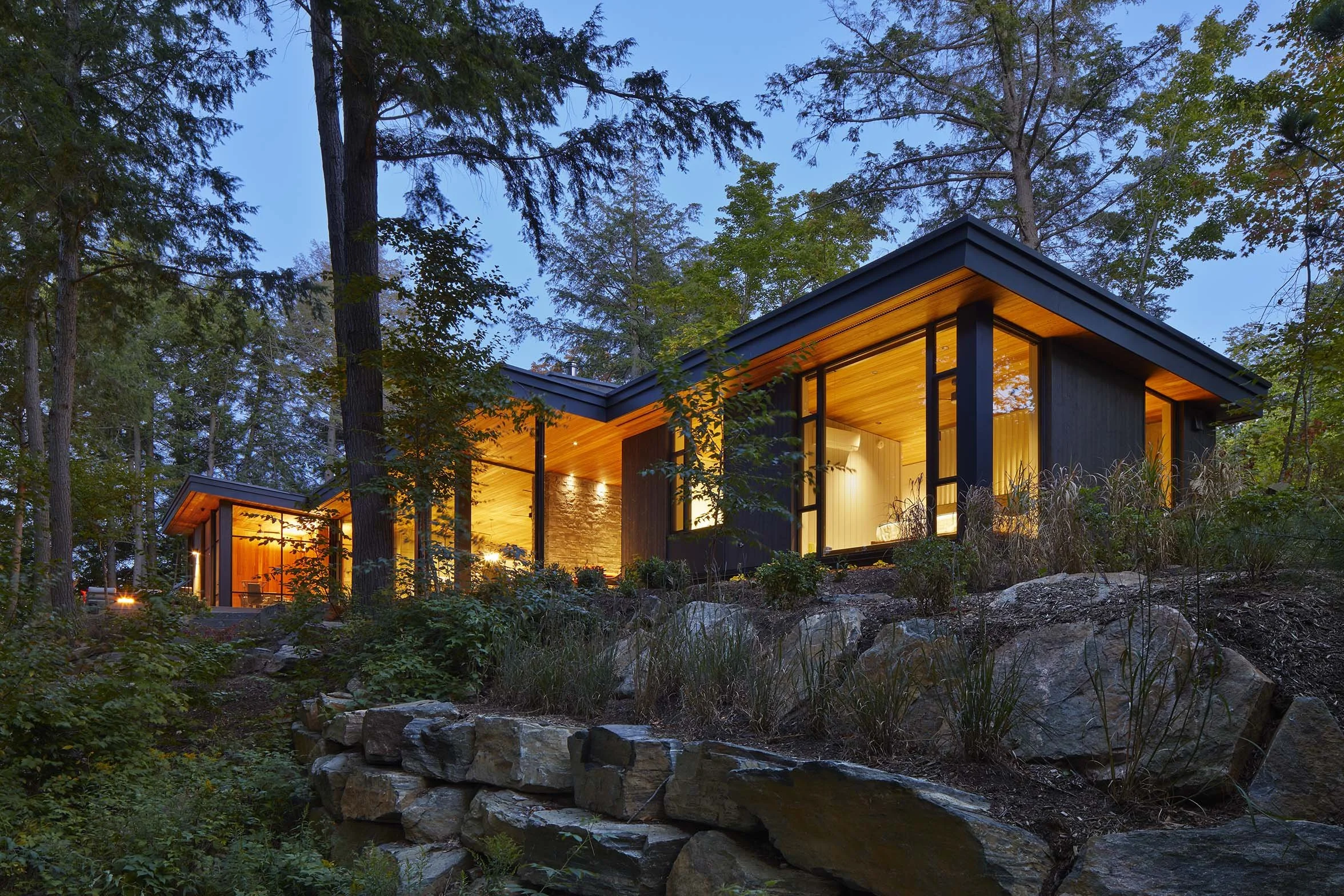
For our Percy Lake Cottage, we achieved the client’s wish for privacy by shaping the natural topography, excavating six feet down from the existing grade while retaining and exposing the rock face between the cottage and the road to form a sheltering embankment. The orientation and stepping forms were a response to views to the lake and the location of the trees and the slope. The darkly coloured siding was selected to blend the cottage into the landscape.
Materiality and weather
A cottage is often unoccupied for months at a time and exposed to weather extremes that urban environments moderate. Material choices that perform well in rural conditions — naturally weathering woods, materials that tolerate freeze-thaw cycling, finishes that don't require regular touching up — are part of the design vocabulary in a way that they aren't in the city. This influences everything from siding selection to window specifications and interior finishes.
Approvals differ from the city
Building in cottage country involves a different regulatory landscape than Toronto. Conservation authority approvals, shoreline setback requirements, restrictions on boathouse and dock structures, septic system regulations all come into play depending on the location. Many of our clients have been surprised by the extent and complexity of these requirements — which is exactly why it helps to work with an architect who has navigated them before.
The relationship clients have with a cottage property is different
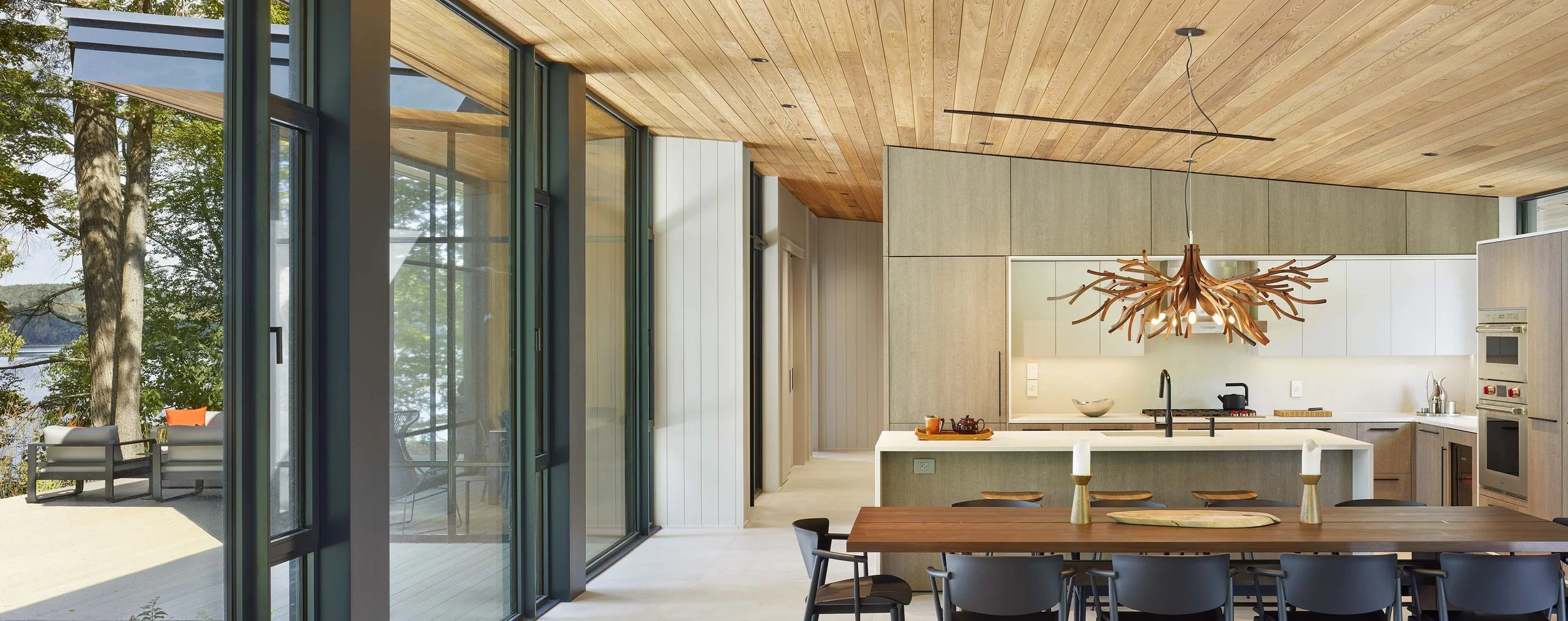
A house in the city is where life happens day-to-day — scheduled living, responsibilities and practicality often carry significant weight. The cottage is where people go to disconnect, to be with family, to feel a deeper relationship to the natural world. The cottages we've designed reflect that — they're less about impressing visitors and more about being genuinely restorative to the people who use them. That's a different brief than an urban house and it produces different architecture.
Contact us for a consultation.
About Michael Taylor Architecture + Design:
Since 2000, Michael and his team have developed an international reputation for creating elegant architecture and interiors in Canada and abroad. Each project is cultivated from the spirit of its location and the distinctive tastes and unique vision of our clients.
Michael Taylor Architecture + Design builds on the legacy of Taylor Smyth Architects and continues its commitment to client service, attention to detail and design excellence.