Anyone can now type a description of a house into an image generator and get a convincing picture back in seconds. It shows a modern house with an upper floor that projects far out over the garden, or a stone cottage on a granite point above a lake. The picture is persuasive, and it is easy to mistake for a design.
An image of a house tells you nothing about whether it fits the lot, meets the zoning bylaws, stands up, stays warm and dry or comes in on budget. Those questions take up most of an architect's work, and they are where AI has the least to offer.
What AI does well
We use AI to enhance the 3-D renderings we produce from our own models, so clients get a more realistic view of the house. We also use it to show a house at dusk, with the warm glow of the lights inside. In both cases the design already exists in the model, with its real dimensions, openings and materials. AI changes how the image reads, not what the house is.
Generated images can sometimes help at the start of a project, when clients show us AI images of houses they like as a way of explaining their aesthetic. That gives us a starting point for a conversation about mood, materials and atmosphere.
Beyond images, AI is widely used for reading and writing. It can summarize a long document, draft routine correspondence and find a clause in a long set of regulations. Each of these saves time, but each needs checking, because AI states wrong answers with the same confidence as right ones.
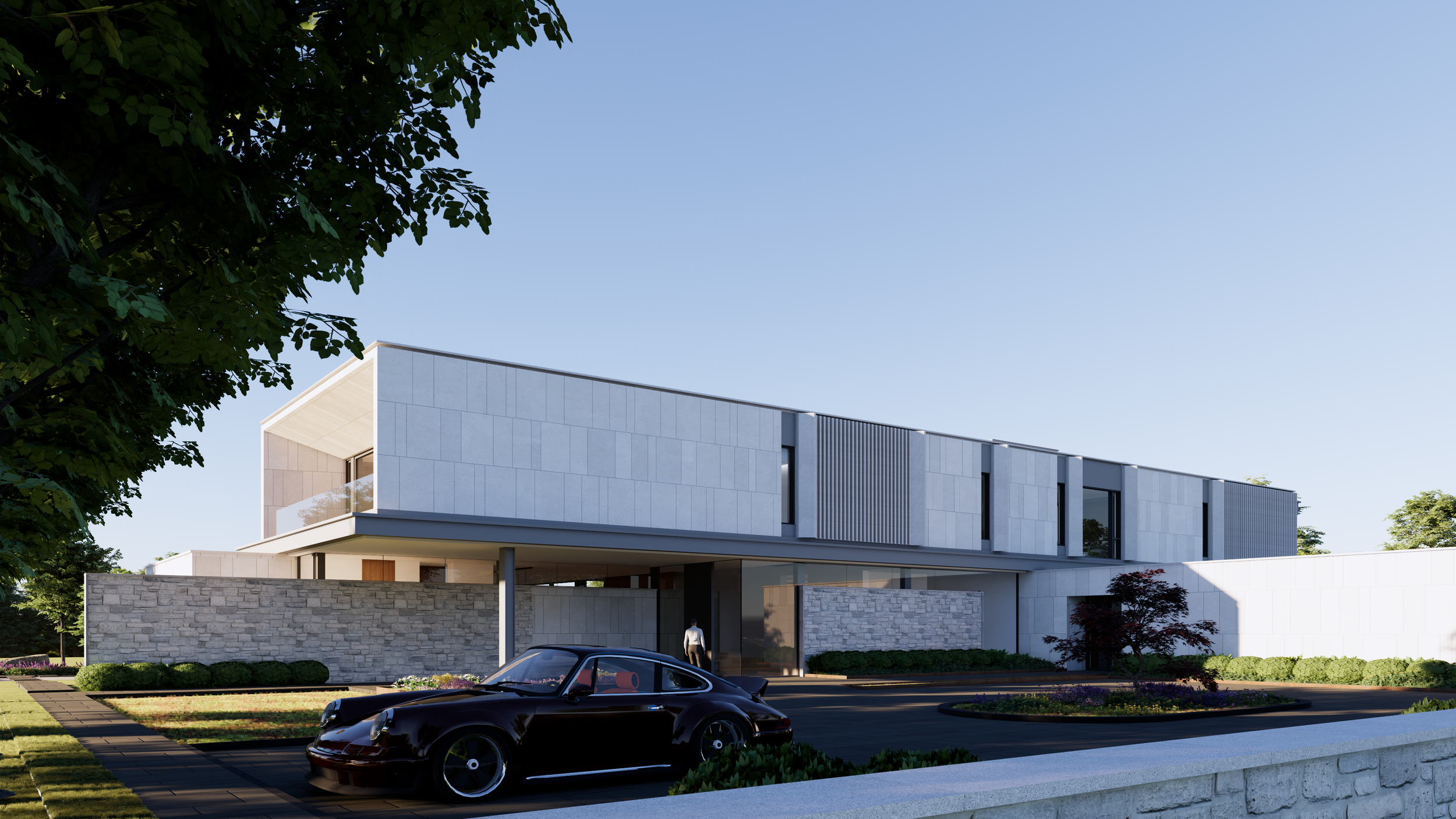
Base rendering of Country House
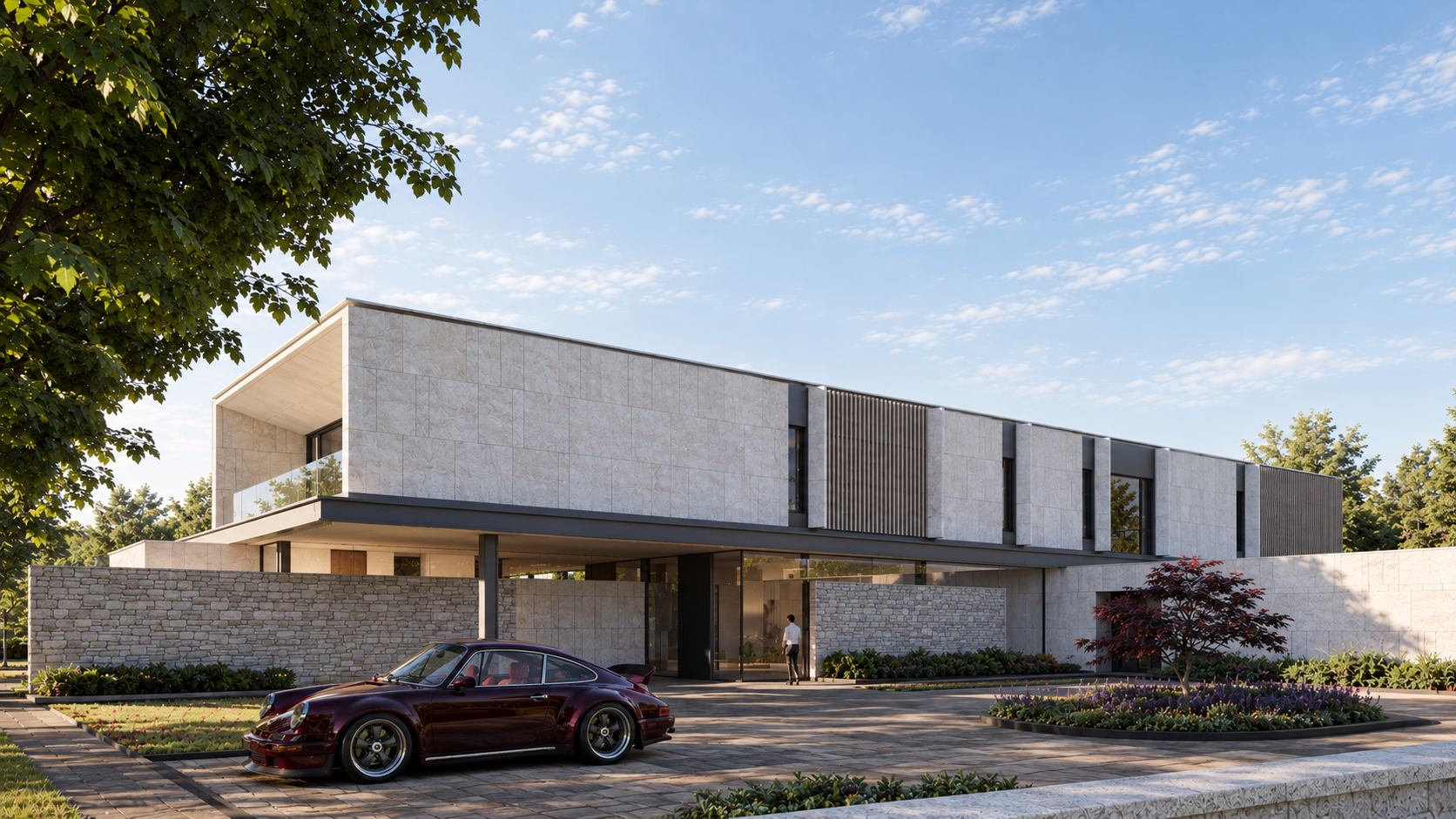
AI enhanced rendering of Country House
What an AI image leaves out
A generated image has no lot lines, so it can't know about the many provisions set by the zoning bylaws, including setbacks, height limits or allowable floor area. It does not consider structure, so a long cantilever costs nothing. In a real house, the same cantilever needs steel, a structural engineer and the budget to pay for both.
It has no sense of sun exposure either. A wall of west-facing glass looks good in a generated image. In July, the late-afternoon sun comes in low, below any overhang, and the room overheats. An image can't show that trade-off. Orientation, glazing and shading have to be worked out together in drawings and 3-D models of the actual house.
A collection of images can also lead to a house with no consistent character. The pictures clients collect often mix several conflicting styles, and AI makes it easy to collect more. Part of our job is to find what draws someone to each image and to translate it into a single, consistent language for their house.
AI can’t experience the site
Every house we design starts with a visit to the site. We look at the grades, the trees that should be kept, the neighbours' windows, the noise from the road and where the morning sun lands. None of that reaches a prompt unless someone already knows to put it there.
The same is true of the client. AI answers the question it is asked, but much of design involves discovering the question. The ideas that shape a house often come from something mentioned in passing, like a morning routine or a favourite view. Hearing that remark, and recognizing that it matters, takes a conversation.
Design is a back-and-forth
A generated image arrives finished in seconds. A design develops over months, through a back-and-forth between client and architect. Each round of drawings and models helps the client understand how they want to live and what matters most to them.
That back-and-forth is also where the trade-offs get made. Fitting a client's vision within the constraints of the site and the zoning means choosing what to keep, what to adjust and what to let go. Working through those choices together, the client sees what each one gains and costs. A prompt skips that journey, and the understanding that comes with it.
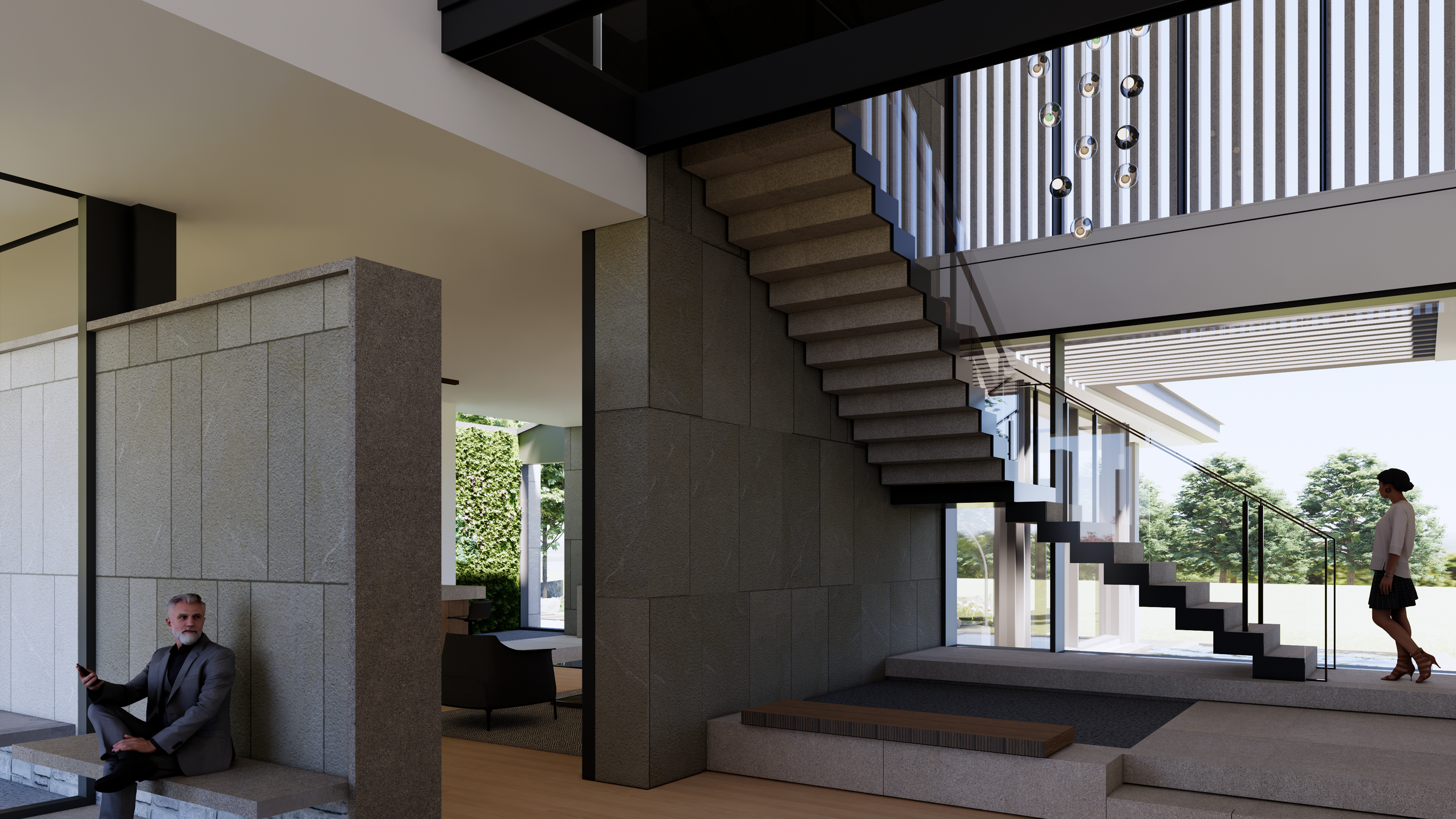
Base rendering of Country House
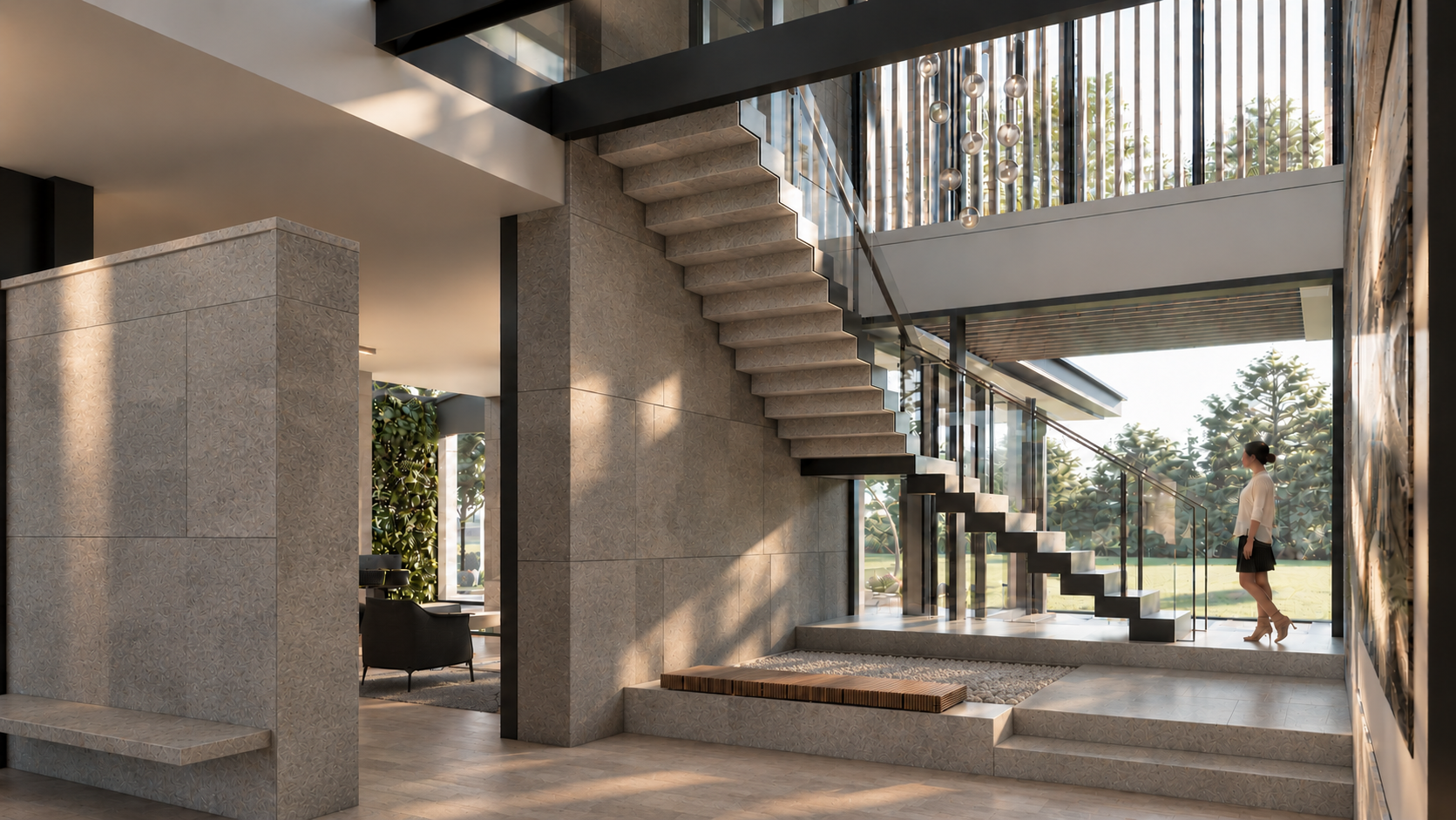
AI enhanced rendering of Country House
AI can’t be responsible
When we issue a set of drawings, we answer for them. That covers the structure, the building envelope, the approvals and the construction that follows, and it stays with us long after the house is finished. AI can contribute to the work, but it can't carry that responsibility.
The Royal Architectural Institute of Canada made the same point in its April 2026 statement on AI in architecture. AI, it says, "does not replace the architect's duty of care, professional judgment, ethical responsibility." Architects remain accountable for any work produced with it, and have to check its output before relying on it.
Where AI fits in our process
We begin using 3-D modelling early in the design process because it shows clients an actual project as it develops, with its actual dimensions, light and materials. That is the difference between how we use AI and an image generated from a prompt. An enhanced rendering shows a real design more clearly. A generated image shows a possible house with no iterative process behind it. A house is still designed by people: the client, who knows how they want to live, and the architect, who is accountable for the result.
Contact us for a consultation.
About Michael Taylor Architecture + Design:
Since 2000, Michael and his team have developed an international reputation for creating elegant architecture and interiors in Canada and abroad. Each project is cultivated from the spirit of its location and the distinctive tastes and unique vision of our clients.
Michael Taylor Architecture + Design builds on the legacy of Taylor Smyth Architects and continues its commitment to client service, attention to detail and design excellence.